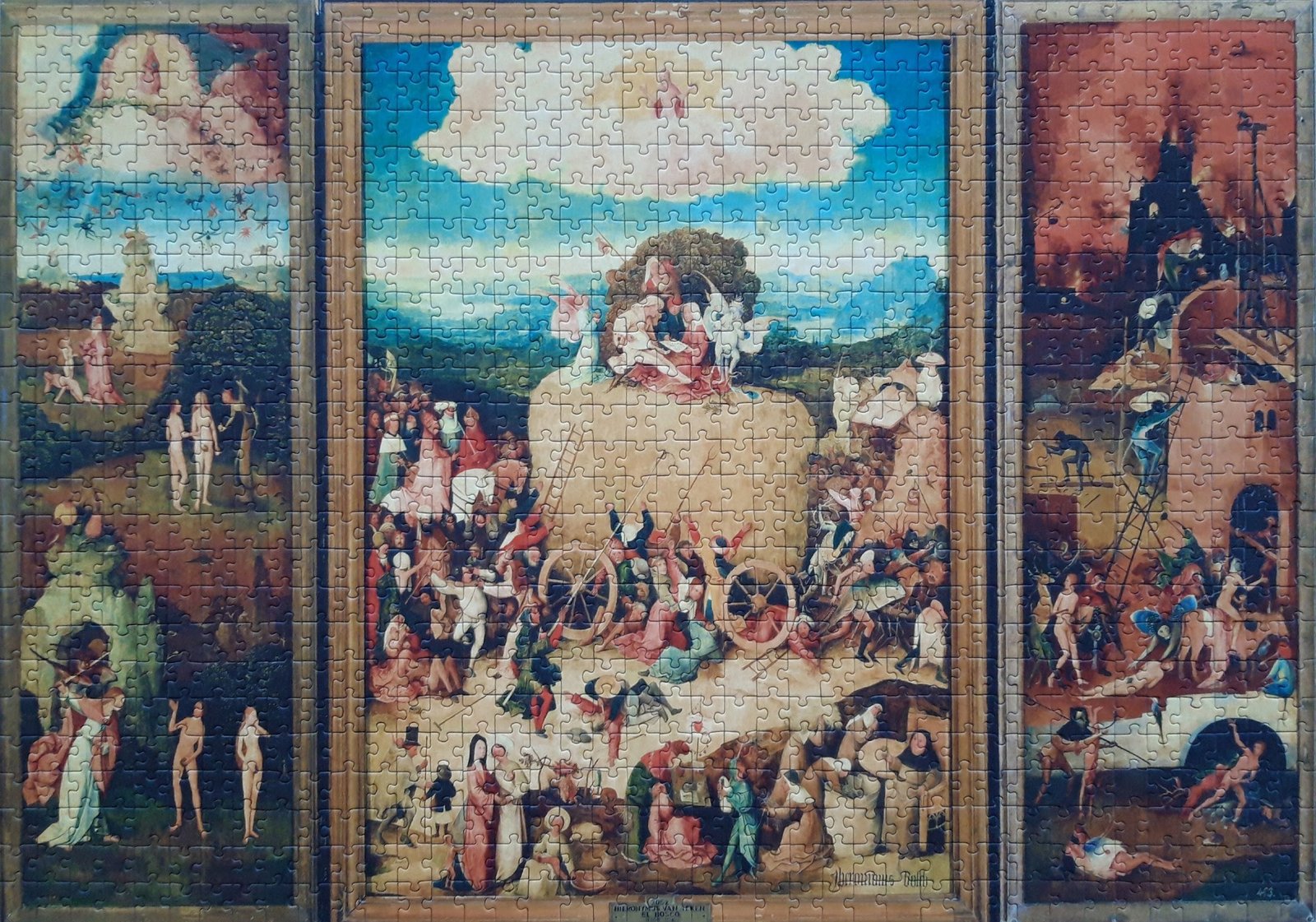

The Haywain Triptych

From Darin's Collection
Puzzle enthusiast and collector
1000 Bluebird (48 x 68.3)
The Haywain Triptych
Hieronymus Bosch
Production Date 2022
This was a quick weekend project. This is a striking Triptych, but it would have been more suitable in a larger piece count.
The Haywain Triptych is one of Hieronymus Bosch's most famous and enigmatic works. The central image is dominated by a huge hay wagon, around which people from all levels of society struggle to obtain the hay. Bosch uses the wagon as an allegory for worldly possessions, greed, and the pursuit of earthly pleasures.
The triptych unfolds like a visual journey. On the left panel, humanity's fall from grace is represented through scenes including the creation of Eve, the Fall, and the expulsion from Paradise. The central panel shows the chaotic world of human desire, with the hay wagon surrounded by sinners, demons, and strange creatures. On the right panel, the wagon's journey culminates in Hell, where the consequences of sin are represented through fantastical and disturbing imagery.
A particularly intriguing feature is the small group of figures at the top of the hay wagon: a couple absorbed in music and romance while an angel and a demon appear nearby. Above them, Christ appears in the clouds, watching the human drama below.
When closed, the exterior panels form a very different image: a lone wayfarer traveling through a dangerous and morally corrupt world. This provides a contemplative introduction to the elaborate interior narrative.
Location: Museo Nacional del Prado, Madrid.


