Wheat Field
From Darin's Collection
Puzzle enthusiast and collector
500 Unknown (40.6 x 50.8)
Wheat Field, 1888
Vincent van Gogh
Production Date Unknown
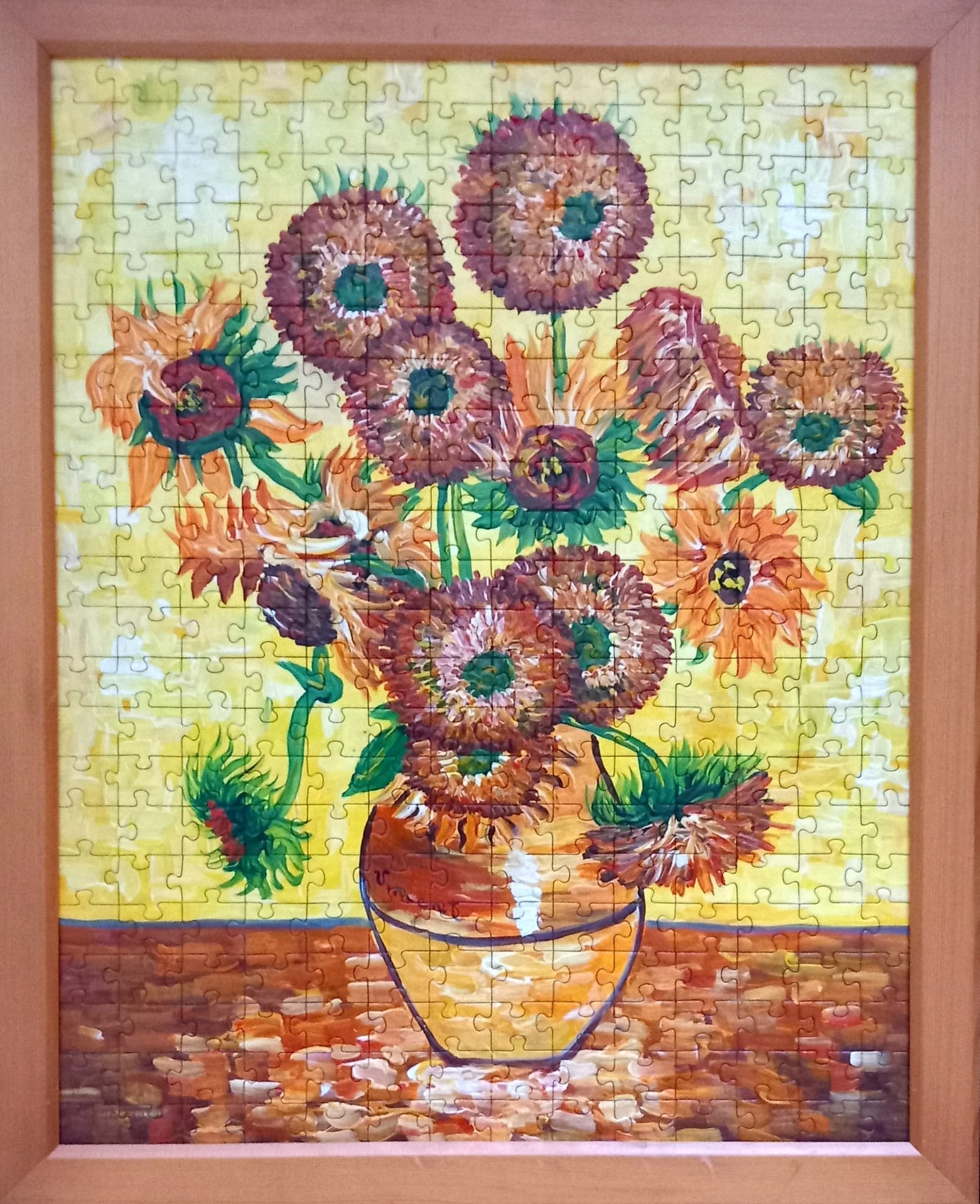
I did this fairly simple puzzle while vacationing in Antalya. The brand is unknown, but it was produced for the Santa Barbara Museum of Art.
Vincent van Gogh’s Wheat Field, painted in 1889, is a vivid landscape from the artist’s period at the Saint-Paul-de-Mausole asylum in Saint-Rémy-de-Provence. The painting depicts a broad field of golden wheat beneath a luminous blue sky, with a dark line of trees and distant mountains forming the horizon. Van Gogh uses energetic, directional brushstrokes throughout the wheat, sky, and foliage, creating a strong sense of movement even within the relatively simple landscape. The intense yellow of the wheat contrasts dramatically with the blues and greens of the surrounding landscape, while the low horizon gives the sky considerable visual weight. Rather than recording the scene with naturalistic precision, Van Gogh transforms it through color and expressive brushwork, creating a landscape that feels both intensely observed and emotionally charged. The work is in the collection of the Santa Barbara Museum of Art and is a particularly good example of Van Gogh's fascination with the cycles of nature and the expressive possibilities of the Provençal landscape.
Wheat Field, 1888
Vincent van Gogh
Production Date Unknown
I did this fairly simple puzzle while vacationing in Antalya. The brand is unknown, but it was produced for the Santa Barbara Museum of Art.
Vincent van Gogh’s Wheat Field, painted in 1889, is a vivid landscape from the artist’s period at the Saint-Paul-de-Mausole asylum in Saint-Rémy-de-Provence. The painting depicts a broad field of golden wheat beneath a luminous blue sky, with a dark line of trees and distant mountains forming the horizon. Van Gogh uses energetic, directional brushstrokes throughout the wheat, sky, and foliage, creating a strong sense of movement even within the relatively simple landscape. The intense yellow of the wheat contrasts dramatically with the blues and greens of the surrounding landscape, while the low horizon gives the sky considerable visual weight. Rather than recording the scene with naturalistic precision, Van Gogh transforms it through color and expressive brushwork, creating a landscape that feels both intensely observed and emotionally charged. The work is in the collection of the Santa Barbara Museum of Art and is a particularly good example of Van Gogh's fascination with the cycles of nature and the expressive possibilities of the Provençal landscape.